
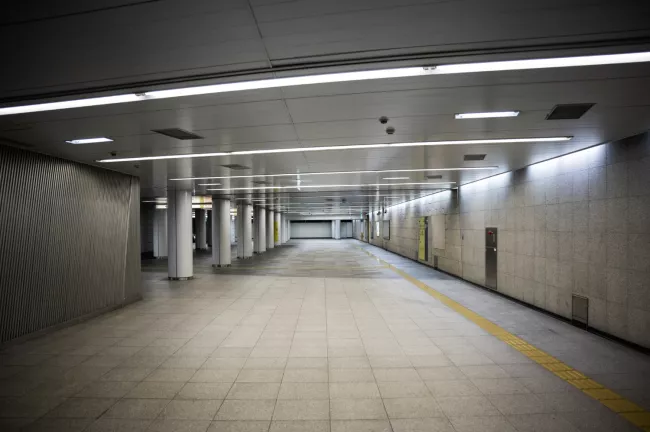
The full-scale war has fundamentally changed the business approach to choosing office real estate. If previously the key criteria were location, business center class, and rental price, today people's safety comes to the forefront. The presence of a shelter in a business center has ceased to be a bonus—for many companies, it's a basic requirement.
In this article, we'll explore which shelters are considered acceptable, what the difference is between a basement and parking, how access should be organized during air raid alerts, and what "red flags" should alert a tenant even before signing a contract.
Why Shelter Has Become a Critical Factor in Office Selection
Air raid alerts have become part of the working reality. Companies that ignore safety issues face:
- constant stress among employees;
- decreased productivity;
- problems with staff retention;
- reputational risks.
On the other hand, offices with well-designed shelters are perceived as responsible employers who care about their team. For many professionals, this becomes a decisive argument when choosing a job.
If previously the key factors were location, business center class, and rental cost, today people's safety comes to the forefront. Constant air raid alerts, missile strikes, and risks to civilian infrastructure have forced companies to revise their office requirements. The availability of accessible shelter is no longer perceived as an additional advantage—for many businesses, it's a basic working condition. Offices without clear safety solutions create additional stress for employees, reduce productivity, and complicate team retention, while business centers with well-designed shelters become more attractive and competitive in the market.
Which Shelters Are Considered Acceptable
When choosing an office, it's important to understand that not every basement premises can automatically be considered a safe shelter. Acceptable shelters are those located below ground level, with strong load-bearing structures, without windows or with additional protection, and with the possibility of ventilation and lighting. An important factor is sufficient space for simultaneous occupancy without crowding, as well as free access during air raid alerts. In modern business centers, the role of shelter is often performed by adapted basements or underground parking, but their suitability depends not on formal status but on the actual condition of the premises, organization of safe zones, and the management company's readiness to provide access and order in critical situations.
Ideally, a shelter in a business center should meet several basic requirements:
- location below ground level;
- absence of windows or presence of protective structures;
- strong load-bearing walls and ceilings;
- sufficient area for accommodating people;
- ventilation or air access capability;
- lighting and emergency power supply.
The best option is a certified shelter that was initially designed or retrofitted according to civil defense standards. However, in reality, business centers often use adapted solutions.
Basement vs Parking: Which Is Safer
Basement Premises
A basement is traditionally considered a more protected option, especially if:
- it's located deep underground;
- it has several entrances;
- it's not used as a warehouse with hazardous materials.
Disadvantages of basements:
- often poor ventilation;
- limited space;
- lack of sanitary conditions.
Underground Parking
Parking is the most common format of "conditional shelter" in modern business centers.
Advantages:
- large areas;
- convenient access;
- ability to quickly accommodate many people.
Disadvantages:
- open entrances and exits;
- possibility of smoke;
- lack of zoning.
Parking can be an acceptable shelter only if:
- there are remote zones without direct outdoor access;
- ventilation is organized;
- specific safe areas are designated, not "the entire parking."
Shelter Accessibility During Air Raid Alerts
The presence of a shelter in a business center has real value only if it is actually accessible during air raid alerts. For tenants, it's critically important that the shelter not be locked during non-working hours, have no access restrictions by passes, and not require separate approval from security. Access to it should be clear, quick, and organized, with clear routes and navigation from office floors. Optimally, the time to descend to the shelter should not exceed a few minutes, and responsibility for opening and maintaining order in the premises should be assigned to the business center's management company. The absence of such mechanisms negates the very idea of a safe office, even if the shelter formally exists.
Having a shelter on paper makes no sense if:
- it's locked during non-working hours;
- access is allowed only to certain tenants;
- there are no clear routes.
It's important for the tenant to find out:
- whether the shelter opens automatically during an alert;
- who is responsible for access at night or on weekends;
- whether there is navigation and signage;
- how much time is needed to reach the shelter from the office.
Optimally, access time should not exceed 2-3 minutes.
Common "Red Flags" That Cannot Be Ignored
When viewing a business center, you should be wary if:
- the shelter is shown "in words" but they don't physically take you there;
- you're offered to "stand by a load-bearing wall" instead of a shelter;
- the premises are cluttered or used as a warehouse;
- there's no lighting, benches, or basic amenities;
- the management company avoids direct answers.
Such signals indicate that safety is not a priority for the building owner.
How to Check the Shelter Before Signing a Contract
Recommended:
- Personally go down to the shelter.
- Check the actual condition of the premises.
- Clarify access rules.
- Record agreements in the contract or its appendix.
For companies with a large team, it's worth separately checking whether there's enough space for all employees.
Shelter as a Competitive Advantage for Business Centers
Today, business centers with quality shelters:
- rent out spaces faster;
- retain tenants longer;
- can justifiably maintain higher rates.
For tenants, this is not only a safety issue but also business stability in conditions of military risks.
Conclusion
Choosing an office without considering shelter is a risk that is no longer justified. Whether it's a basement or parking, a certified shelter or adapted premises—each option requires careful verification.
OfficeFinder helps select offices taking into account real safety conditions, not just descriptions in presentations. This allows businesses to work more confidently even in difficult times.
FAQ: Shelter in a Business Center
What shelter in a business center is considered safe?
A safe shelter is one located below ground level, without windows, with strong ceilings, ventilation, and sufficient space for people. The best option is a specially equipped or certified shelter, but adapted basements or underground parking are also acceptable if basic safety requirements are met.
Is underground parking suitable as a shelter during shelling?
Underground parking can be used as a shelter if it has remote zones without direct outdoor access, ventilation is provided, and specific safe places are designated. Open entrances, thin partitions, and lack of zoning reduce the level of protection.
How is a basement better or worse than parking?
Basements are usually better protected due to depth and thick walls but often have ventilation problems and limited space. Parking is more spacious and convenient for quick access but requires proper selection of a safe zone.
Is a business center required to have a shelter?
Legally, not all business centers are required to have a certified shelter, but a responsible owner should provide the possibility of safe occupancy during air raid alerts. For tenants, it's important to check actual conditions, not formal statements.
How to check a shelter before renting an office?
Before signing a contract, you should personally visit the shelter, assess its condition, check accessibility during alerts, availability of lighting, ventilation, and a convenient route from the office. It's advisable to record access conditions in the lease agreement.
What "red flags" indicate a dangerous shelter?
Situations to be wary of include when the shelter is locked, cluttered, has no lighting, is used as a warehouse, or when the management company avoids clear answers about access and responsibility during alerts.
Why is an office with a shelter important for business?
An office with an accessible shelter reduces risks to employees' lives, decreases stress levels in the team, increases staff loyalty, and allows the company to work more stably in wartime conditions.